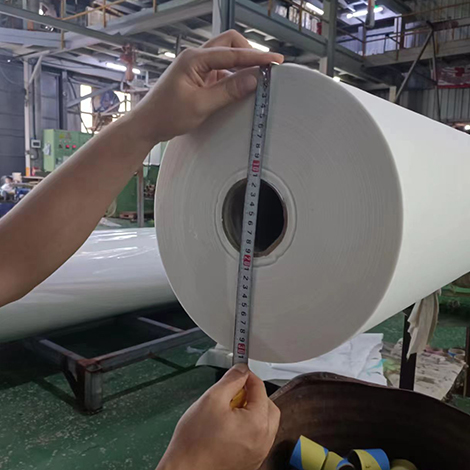
De un fabricante de rollos de tela no tejida a usted
El tejido de polipropileno (PP) está presente en todas partes. Desde batas médicas y bolsas de la compra hasta revestimientos de muebles y cubiertas agrícolas, es uno de los materiales más versátiles de la fabricación moderna.
Pero como cualquier material, el tejido de PP tiene fortalezas y debilidadesComprender ambos aspectos es clave para elegir el tejido adecuado para su aplicación.
Analicemos de forma honesta y equilibrada las ventajas y desventajas del tejido de polipropileno.
¿Qué es el tejido de polipropileno?
El tejido de polipropileno es un tejido sintético hecho de resina de polipropileno, un polímero termoplástico derivado del petróleo. Se puede producir como:
- PP tejido — cintas planas tejidas en telar (bolsas de alta resistencia, FIBC, lonas)
- PP no tejido spunbond — filamentos continuos unidos mediante calor (médicos, higiénicos, de embalaje, de mobiliario)
- PP fundido por soplado — microfibras para filtración (capas filtrantes de la mascarilla)
En este artículo, nos centramos principalmente en PP no tejido spunbond, la forma más versátil y ampliamente utilizada.
Ventajas del tejido de polipropileno
1. Ligero
El tejido PP es extremadamente ligero. Con una resistencia comparable, pesa 30–40% menos que las alternativas tejidas. Esto se traduce en menores costos de envío, manejo más sencillo y menos desperdicio de material.
2. Duradero y resistente al desgarro
El PP no tejido tiene resistencia al desgarro uniforme en todas las direcciones — a diferencia de los tejidos convencionales, que se rasgan fácilmente a lo largo de la trama, la estructura de filamento continuo resiste la perforación y la abrasión.
3. Resistencia química
PP es Altamente resistente a la mayoría de ácidos, álcalis y disolventes.No se degrada al entrar en contacto con productos químicos comunes, lo que lo hace ideal para aplicaciones industriales, agrícolas y médicas.
4. Transpirable pero protector.
El tejido spunbond permite para que pase el aire y el vapor de humedad Al mismo tiempo que bloquea líquidos y polvo fino. Esta combinación única lo hace perfecto para batas médicas, componentes de pañales y cubiertas agrícolas.
5. Rentable
El tejido de PP es significativamente más barato que alternativas como el algodón, el poliéster o los laminados. La producción a alta velocidad (hasta 600 m/min) mantiene los costos bajos.
6. Excelente calidad de impresión
El tejido no tejido spunbond tiene una superficie lisa, parecida al papel Admite impresión flexográfica y de huecograbado de alta calidad. Es fácil conseguir logotipos nítidos, colores brillantes y códigos de barras escaneables.
7. Sin pelusa
A diferencia del algodón o los tejidos, el PP spunbond tiene Sin deshilachado ni fibras sueltas.Corta limpiamente y se mantiene limpio, algo esencial para aplicaciones médicas, en salas blancas y en el envasado de alimentos.
8. Reciclable
PP es 100% reciclable y cuenta con un sistema de reciclaje bien establecido. Puede reprocesarse para convertirlo en nuevos productos, reduciendo así el impacto ambiental.
9. Hidrofóbico (repelente al agua)
PP de forma natural repele el aguaNo absorbe la humedad, por lo que se mantiene seco, resiste el moho y conserva su resistencia incluso en condiciones de humedad.
Desventajas del tejido de polipropileno
1. Sensibilidad a los rayos UV
Este es el mayor inconvenienteSin estabilizadores UV, el tejido de PP se degrada rápidamente con la luz solar, generalmente en un plazo de 2 a 6 meses. Las cadenas de polímero se rompen, lo que provoca fragilidad, agrietamiento y pérdida de resistencia.
Solución: Los estabilizadores UV pueden prolongar la vida útil en exteriores de 1 a 3 años.
2. Baja resistencia al calor
PP comienza a ablandarse alrededor de 150 °C (302 °F) y se funde a aproximadamente 160–170 °C. No es apto para aplicaciones de alta temperatura ni para entornos donde entre en contacto con superficies calientes.
Solución: Utilizar materiales alternativos (por ejemplo, poliéster) para aplicaciones de alta temperatura. (Nos centramos en el polipropileno).
3. Mala adhesión sin tratamiento
Debido a que el PP no es polar, Los adhesivos y recubrimientos no se adhieren fácilmente. a superficies no tratadas. Esto puede suponer un reto para ciertos procesos de unión o laminación.
Solución: El tratamiento corona o el tratamiento con plasma mejoran la energía superficial para una mejor adhesión.
4. Acumulación de carga estática
El PP es un aislante y puede generar electricidad estática, especialmente en condiciones secas. Esto puede atraer polvo, causar molestias (en la ropa) o interferir con los componentes electrónicos.
Solución: Existen aditivos antiestáticos o tratamientos superficiales.
5. No biodegradable
Mientras que PP es reciclableNo es biodegradable. En condiciones de vertedero, persiste durante cientos de años. Esto representa un problema de sostenibilidad para los productos de un solo uso.
Solución: El PP se recicla ampliamente; los programas de ciclo cerrado están en auge.
6. Puede dañarse con aceite y grasa.
Aunque el PP resiste la mayoría de los productos químicos, se hincha y se ablanda cuando se expone a disolventes de hidrocarburos, incluidos aceites y grasas. Esto limita su uso en ciertos entornos automotrices e industriales.
Ventajas y desventajas de un vistazo
AspectoVentajaDesventaja
| Peso | Ligero, reduce los costos de envío. | — |
| Fortaleza | Resistencia uniforme al desgarro | Se degrada con la exposición a los rayos UV. |
| Resistencia química | Resiste la mayoría de los ácidos y álcalis. | Dañado por aceites y disolventes |
| Transpirabilidad | Excelente | — |
| Resistencia al calor | Bueno hasta ~100°C | Se ablanda a 150 °C y se funde a 170 °C. |
| Imprimibilidad | Excelente (spunbond) | De mala calidad (PP tejido) |
| Reciclabilidad | 100% reciclable | No biodegradable |
| Costo | Bajo costo frente a alternativas | — |
Cómo superar las limitaciones
La mayoría de las desventajas de PP han sido soluciones prácticas:
LimitaciónSolución
| degradación por rayos UV | estabilizadores UV |
| Baja resistencia al calor | Evite las aplicaciones de alta temperatura; utilice PP solo por debajo de 100 °C de forma continua. |
| Mala adhesión | Tratamiento contra el coronavirus, tratamiento con plasma o tratamiento inicial |
| Carga estática | Aditivos antiestáticos (por ejemplo, monoestearato de glicerilo) |
| Sensibilidad al aceite | Evite el contacto con aceites; utilice recubrimientos si es necesario. |
¿Cuándo conviene elegir tejido de polipropileno?
Elija la tela PP cuando:
- Necesitas Material ligero y de bajo costo
- Usted necesita transpirabilidad con resistencia a los fluidos (médico, higiene)
- Quieres Calidad de impresión nítida y colorida (embalaje, bolsas)
- La aplicación es en interiores o protegidos de los rayos UV. (muebles, material médico, almacenamiento)
- Necesitas resistencia química (agricultura, industria)
Evite usar tela de PP cuando:
- Exposición continua a los rayos UV en exteriores (a menos que estén estabilizados contra los rayos UV).
- Temperaturas de funcionamiento superiores a 100 °C
- Contacto con hidrocarburos (aceites, gasolina, ciertos disolventes)
- Los materiales biodegradables son obligatorios por normativa.
En resumen
El tejido de polipropileno no es un material milagroso, pero es un práctico, versátil y rentable Solución para una amplia gama de aplicaciones.
Sus puntos fuertes (ligero, resistente, resistente a productos químicos, transpirable, imprimible, sin pelusa) superan con creces sus puntos débiles (sensibilidad a los rayos UV, limitaciones térmicas, sensibilidad al aceite). especialmente cuando eliges el grado y el paquete de aditivos adecuados.
Mediante estabilizadores UV, antioxidantes y tratamientos superficiales, podemos personalizar el tejido no tejido de PP para que funcione en prácticamente cualquier entorno.
¿Busca un proveedor fiable de rollos de tela no tejida spunbond de PP de una sola capa? Ofrecemos soluciones personalizables con estabilizadores UV, tratamientos antiestáticos y otras opciones, todas ellas adaptadas a su aplicación.
Contáctanos para obtener muestras o un presupuesto. – Encontremos el tejido de PP adecuado para su producto.
marketing@henghuanonwoven.com