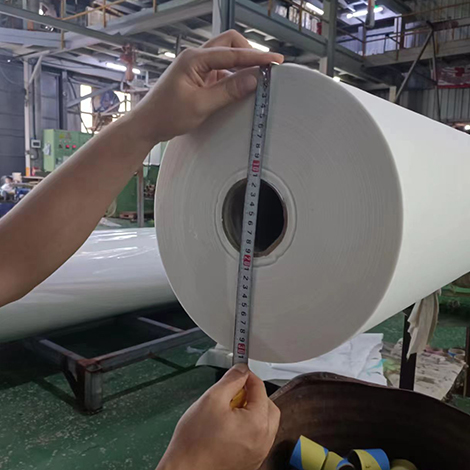
De un fabricante de rollos de tela no tejida a usted
¿Alguna vez te has preguntado cómo un rollo de tejido no tejido spunbond de polipropileno ¿Está hecho?
A diferencia de los tejidos tradicionales (que requieren hilar el hilo y luego tejerlo en un telar), el tejido no tejido spunbond se produce en un proceso único, continuo y altamente eficiente.
Recorramos la línea de producción paso a paso.
Paso 1: Materia prima: resina de polipropileno
Todo comienza con Resina de polipropileno (PP) 100% virgen — pequeñas bolitas translúcidas que parecen diminutas cuentas de plástico.
Estos gránulos son el mismo material base que se utiliza en muchos productos plásticos, pero para los no tejidos, utilizamos un grado especializado con un índice de fluidez en estado fundido (MFI) específico; típicamente 25–40 g/10 min — lo que garantiza la correcta formación de las fibras.
En esta etapa se mezclan con la resina los aditivos opcionales (estabilizadores UV, retardantes de llama, pigmentos).
Paso 2: Extrusión — Fusión de la resina
Los gránulos de PP se introducen en un extrusora calentadaDentro de la extrusora, un tornillo giratorio empuja los gránulos hacia adelante a través de zonas calentadas, generalmente De 220 °C a 260 °C (de 428 °F a 500 °F).
Los gránulos se funden formando un líquido polimérico espeso, similar a la miel.
Paso 3: Filtración y medición
El polímero fundido pasa a través de un sistema de filtración para eliminar cualquier contaminante o partícula sin fundir. Luego, un bomba dosificadora Controla con precisión el caudal hacia la hilera, lo que garantiza un gramaje uniforme del tejido (GSM).
Paso 4: Hilado — Creación de filamentos continuos
El polímero fundido se fuerza a través de un pezón hilador — una placa de metal con cientos o miles de pequeños agujeros (normalmente de 0,3 a 0,6 mm de diámetro).
A medida que el polímero sale de la hilera, se forma filamentos líquidos continuosInmediatamente, se sopla aire a alta velocidad (aire de enfriamiento) sobre los filamentos para enfriarlos y convertirlos de líquido a sólido.
Esta es la parte "hilada" de spunbond.
Paso 5: Dibujo — Estiramiento de los filamentos
Después de enfriarse, los filamentos sólidos pasan a través de un boquilla de aspiración de aire de alta velocidadEsto estira los filamentos varias veces su longitud original, lo que:
- Reduce el diámetro del filamento (normalmente hasta 15-35 micras)
- Orienta las moléculas de polímero a lo largo del eje de la fibra
- Aumenta la resistencia a la tracción de modo significativo
Paso 6: Formación de la red: Colocación de los filamentos
Los filamentos estirados se colocan luego sobre una cinta transportadora en movimiento (llamado alambre formador). Un sistema de vacío debajo de la cinta tira de los filamentos hacia abajo, creando un telaraña uniforme y dispuesta al azar.
Esta orientación aleatoria es lo que le da al spunbond su resistencia uniforme en todas las direcciones — a diferencia de la tela tejida, que se rasga fácilmente a lo largo del tejido.
Paso 7: Unión: fusión de los filamentos.
La red aleatoria aún no tiene fuerza; los filamentos simplemente descansan holgadamente unos sobre otros. Ahora necesitan ser garantizado.
La red pasa a través de un calandra (rodillos calefactados) — normalmente dos rodillos:
- Rodillo con relieve: Tiene puntos o patrones en relieve
- Rodillo liso: Superficie plana
Calor y presión (alrededor de 150°C–170°C) fundir parcialmente los filamentos en los puntos de contacto, fusionándolos entre sí. El resultado: un tejido fuerte y cohesivo.
Esta es la parte de "enlace" del spunbond.
Paso 8: Tratamiento de la superficie (opcional)
Dependiendo de la aplicación, el tejido puede recibir tratamientos de superficie:
- Tratamiento hidrofílico: Hace que el agua sea absorbente (para toallitas húmedas, higiene femenina, capas absorbentes médicas).
- Tratamiento antiestático: Reduce la carga estática
- Tratamiento antibacteriano: Para aplicaciones médicas
Paso 9: Enrollado — Enrollar la tela terminada
El tejido acabado pasa a través recorte de bordes (para asegurar bordes limpios y rectos), luego se enrolla en grandes núcleos de cartón, típicamente Diámetro interior de 3 o 6 pulgadas.
Los anchos de los rollos suelen variar desde De 1,6 m a 3,2 mDependiendo de la línea de producción, la longitud de los rollos varía según el gramaje y los requisitos del cliente.
Paso 10: Pruebas de calidad y embalaje
Antes del envío, cada rollo se somete a pruebas de calidad:
- Gramaje (GSM): Verificado mediante muestreo y escáneres automatizados.
- Resistencia a la tracción: MD (dirección de la máquina) y CD (dirección transversal)
- Alargamiento: Porcentaje de estiramiento antes de la pausa
- Ancho: Garantiza dimensiones uniformes
- Inspección visual: Sin agujeros, contaminación ni uniones irregulares.
Los rollos de papel se envuelven en plástico protector, se etiquetan y se preparan para su envío.
Diagrama de línea de producción (conceptual)
| Escenario | Equipo | Producción |
|---|
| 1. Materia prima | Tolva / Silo de resina | gránulos de PP + aditivos |
| 2. Extrusión | Extrusora de un solo husillo | Polímero fundido |
| 3. Giro | Hiladora + aire de enfriamiento | Filamentos sólidos continuos |
| 4. Dibujo | Boquilla de aire de alta velocidad | Filamentos orientados y estirados |
| 5. Formación de la red | Cinta de conformado + vacío | Telaraña de filamentos dispuestos aleatoriamente |
| 6. Unión | Rodillos de calandrado calefactados | Tejido no tejido adherido |
| 7. Enrollado | Bobinadora/cortadora | Rollos terminados |
Ventajas clave del proceso Spunbond
| Ventaja | Por qué es importante |
|---|
| Alta velocidad de producción | Hasta 600 m/min, mucho más rápido que el tejido. |
| Filamento continuo | Sin pelusa, sin deshilachado, sin puntos débiles por fibras cortas. |
| Proceso de un solo paso | De la resina al tejido en minutos: bajo consumo de energía, poca mano de obra. |
| Propiedades uniformes | Gramaje y resistencia uniformes en todo el rollo. |
| Reciclable | 100 % PP: se puede reprocesar para fabricar nuevos productos. |
Spunbond frente a otras tecnologías de no tejidos
| Proceso | Tipo de fibra | Fuerza típica | Aplicaciones comunes |
|---|
| Spunbond | Filamento continuo | Alto | Medicina, agricultura, embalaje, geotextiles |
| Meltblown | microfibra | Bajo | Filtración, capa intermedia de la máscara |
| Cardado (fibra discontinua) | fibras de corte corto | Medio | Entretelas, toallitas, aislamiento |
En resumen
El proceso spunbond es elegante en su sencillez — Fundir, hilar, colocar, unir, enrollar. Desde la resina en bruto hasta el tejido acabado, todo en una sola línea continua.
Nada de tejer. Nada de tricotar. Nada de coser. Simplemente Tejido de alta resistencia, uniforme y rentable Producido a escala industrial.
Por eso, el tejido no tejido spunbond se ha convertido en el material preferido para miles de millones de productos desechables y duraderos en todo el mundo.
¿Busca un proveedor fiable de rollos de tela no tejida spunbond de PP? Fabricamos tejido spunbond de una sola capa con gramajes desde 10 g/m² hasta 150 g/m², con anchos y colores personalizados disponibles.
Contáctanos para obtener muestras o un presupuesto. – Hablemos de sus necesidades en materiales no tejidos.